
Is ChatGPT a Good AI Attorney? What It Can and Cannot Do
ChatGPT can explain a contract clause at 2 a.m. for free — but it is not a licensed lawyer, and treating it as one has already cost people money in court. For everyday orientation, many people now turn to a purpose-built AI attorney tool instead of a general chatbot, precisely because the gaps below are so easy to miss. The short answer: ChatGPT is a capable legal research and drafting assistant, not a substitute for professional legal advice.
This article covers what ChatGPT actually does well, where it fails dangerously, the real court sanctions from a case built on fabricated citations, the privacy risks of typing case details into a chatbot, and how to use it safely. This article is legal information, not legal advice — for a decision with real consequences, talk to a licensed attorney in your jurisdiction.
What ChatGPT Actually Is (and Who Built It)
ChatGPT is a product of OpenAI, and understanding what it technically is explains both its usefulness and its limits in legal work.
It’s a language model, not a legal database
ChatGPT is a large language model (LLM) built by OpenAI and launched on November 30, 2022. An LLM predicts the next word in a sequence based on patterns learned from massive amounts of training text — it does not “look up” the law in a verified, continuously updated database the way legal research software does. GPT-4, the model OpenAI released in March 2023, reportedly scored near the 90th percentile on a simulated Uniform Bar Exam, according to OpenAI’s own research, as detailed in the Wikipedia entry on ChatGPT. That result is a big reason ChatGPT sounds so convincingly like a lawyer.
That fluency has a hidden ceiling: the model’s knowledge is frozen at whatever point its training data was collected, and it has no live connection to a courthouse docket, a state legislature, or a bar association’s rulebook unless a specific tool is bolted on. It also can’t tell you, on its own, which parts of an answer it is confident about and which parts it is quietly guessing — everything comes out in the same fluent tone.

Why “sounds like a lawyer” is not “is a lawyer”
Passing a simulated bar exam question is not the same as being licensed to practice law. The model carries no bar license, no malpractice insurance, and no legal duty of care toward you. As one legal technology commentary put it, a large language model works by generating “an answer by predicting it one word at a time” based on statistical patterns — not by reasoning through precedent the way a trained attorney does. That single fact explains almost every risk described further down this page.
A few things separate a real, licensed attorney from a fluent chatbot:
- A law license issued and monitored by a state bar
- Malpractice insurance that covers you if the advice is wrong
- A professional duty of care owed directly to you as a client
- Personal accountability for the accuracy of what they file in court
What ChatGPT CAN Do Well for Legal Tasks
Used correctly, ChatGPT and similar generative AI legal tools are genuinely useful in the early stages of a legal question — before anything gets filed, signed, or relied upon.
Drafting first drafts and explaining jargon. ChatGPT is strong at translating dense legalese into plain English, summarizing a long lease or terms-of-service document, drafting a rough first-pass template such as a demand letter or a simple NDA outline, and helping you prepare a list of smart questions to bring to a real attorney. The free tier handles most of this; ChatGPT Plus runs about $20 a month for expanded access. In every case, the output is a first draft, not a finished legal document.
Common first-draft use cases include:
- A demand letter outline before a small claims filing
- A plain-English summary of a lease or terms-of-service page
- A rough NDA or simple agreement template for a lawyer to refine
- A list of clarifying questions to bring to your actual consultation
Legal research triage — with verification. ChatGPT can help you orient yourself in an unfamiliar area of law and generate leads worth chasing down. But every citation, statute reference, or case name it produces must be checked against a real, authoritative source — an official court website, a state statute database, or a licensed attorney. Never file, sign, or send anything ChatGPT wrote without a human check first.
| Good use of ChatGPT | Risky use of ChatGPT |
|---|---|
| Explaining what a clause in plain English means | Filing a brief with ChatGPT’s case citations unchecked |
| Summarizing a long contract before your call with counsel | Relying on it for your specific state’s current statute |
| Drafting a rough first version of a simple letter | Signing a contract it “finalized” with no review |
| Preparing questions to ask a real lawyer | Pasting a client’s name and case facts into the chat box |
What ChatGPT CANNOT Do (the Dangerous Gaps)
The same prediction mechanism that makes ChatGPT good at sounding fluent is what makes it unreliable as a stand-alone legal tool. Since even a jurisdiction-aware AI attorney online still needs human review, the same is doubly true for a general-purpose chatbot never built for law in the first place.
It invents fake cases and law (hallucination)
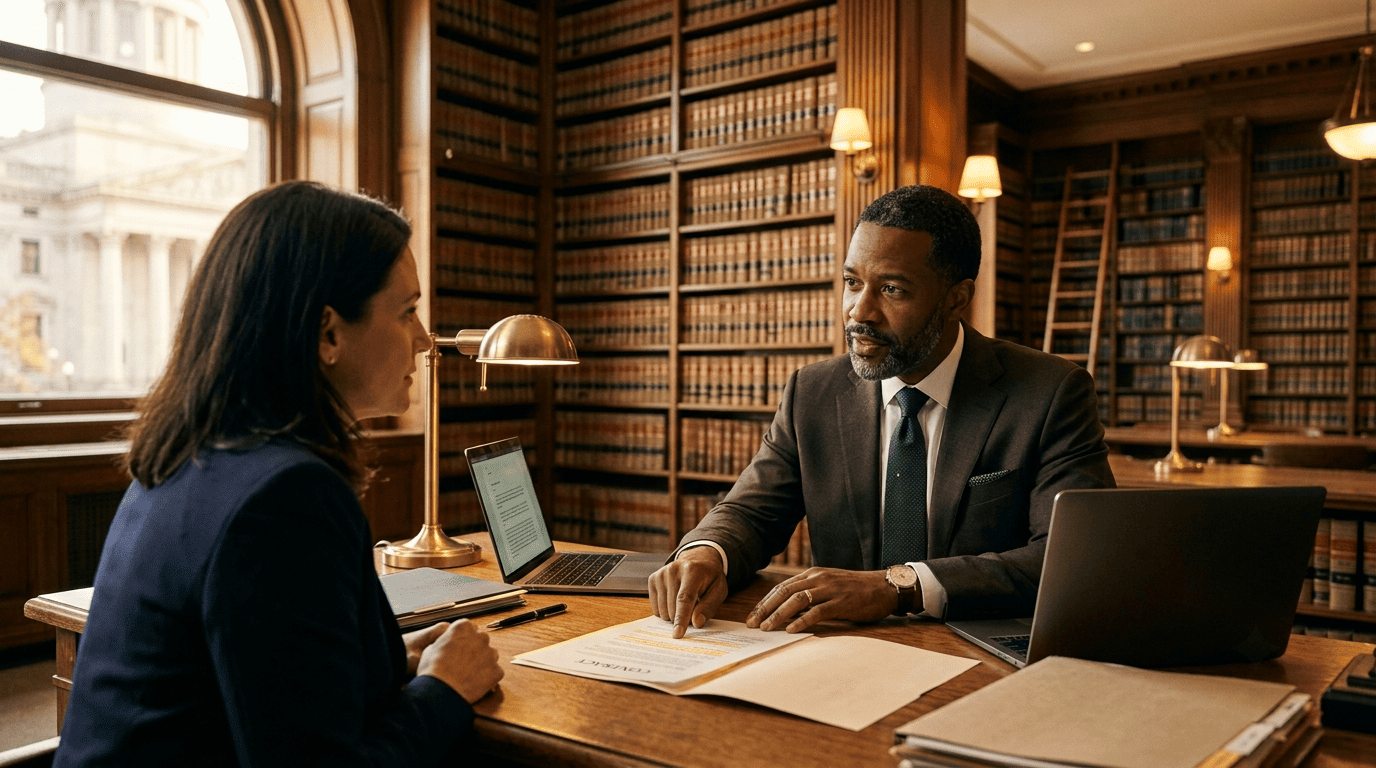
AI hallucination is confident, fluent, plausible-sounding output that is simply false — including fabricated case names, invented quotations, and citations to court decisions that never happened. For legal use, this is the single most dangerous failure mode, because a fabricated citation reads exactly like a real one until someone checks it.
In legal contexts, hallucinations tend to show up in a few recurring forms:
- A case name and citation that sound real but don’t exist
- A quote attributed to a real judge or statute that was never actually written
- A confident answer that mixes the rules of two different states or countries
- A statute number or filing deadline that is simply wrong
It doesn’t know YOUR jurisdiction or current law
Law varies enormously by state and country, and it changes constantly through new statutes and rulings. A general-purpose model can blend rules from different jurisdictions in one answer or rely on training data that is already out of date by the time you ask your question.
This matters even for questions that sound simple, like a filing deadline or a notice period, because a rule that is correct in one state can be entirely wrong next door. The model has no built-in way to flag that uncertainty for you.
No accountability, no privilege, no duty
A licensed attorney is regulated by a state bar, carries malpractice insurance, and owes you a professional duty of care the moment you become a client. ChatGPT owes you nothing of the kind — there is no license to revoke and no malpractice claim to file if the answer is wrong.
If a licensed attorney gives you negligent advice, you have recourse: a malpractice claim, a bar complaint, or an appeal built on the record of what they told you. None of those options exist against a chatbot, which makes independent verification the only real safeguard you have.
The Cautionary Tale: Mata v. Avianca
The clearest real-world proof of the hallucination risk is a 2023 case in the Southern District of New York.
What happened
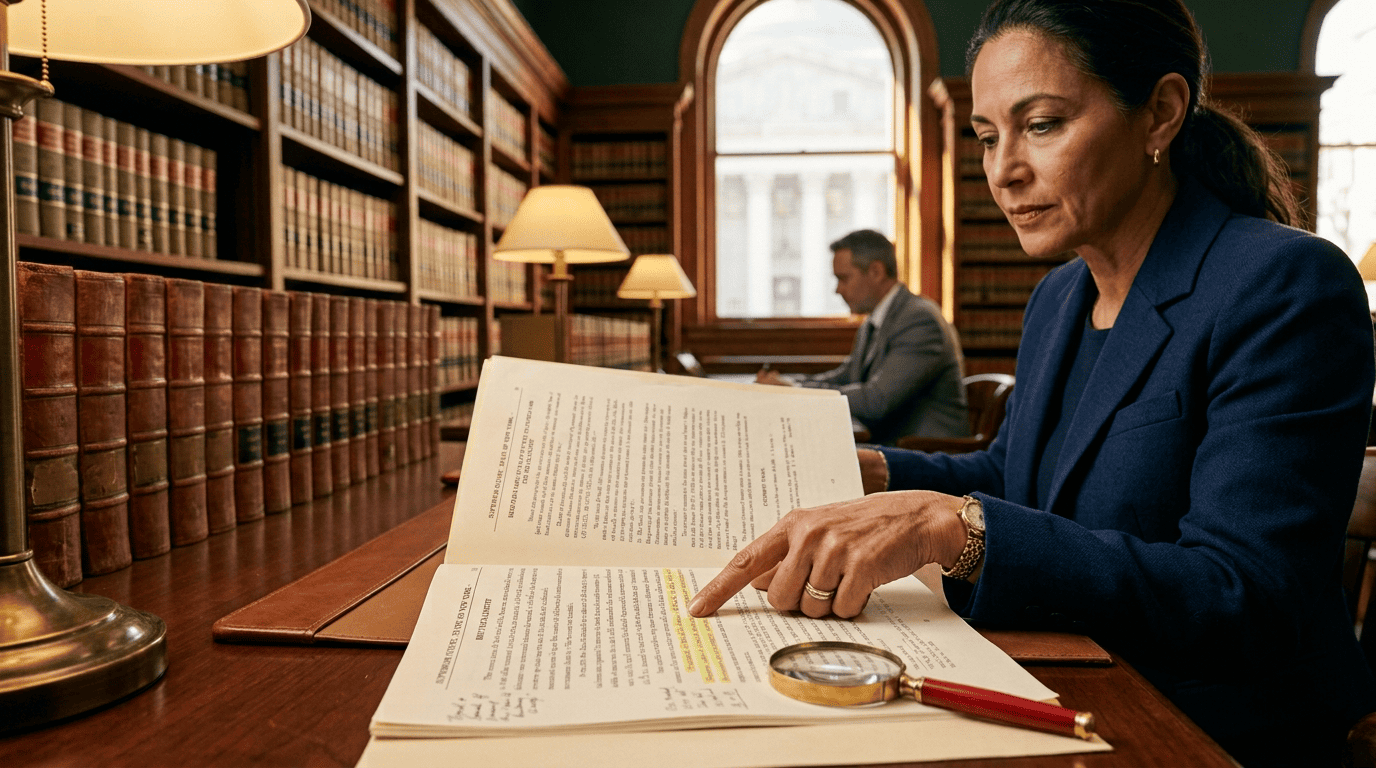
In Mata v. Avianca, Inc., attorneys representing the plaintiff filed a legal brief citing several court decisions that ChatGPT had generated — cases that did not exist. When opposing counsel and the court could not locate the citations, the attorneys asked ChatGPT to confirm them.
When attorney Steven Schwartz asked ChatGPT whether the cases were real, the chatbot reassured him the cases “indeed exist and can be found in reputable legal databases such as LexisNexis and Westlaw.”
Mata v. Avianca, Inc. — Wikipedia
No one on the legal team independently checked the citations against an actual database before the brief was filed with the court. That single missed step — one search in a real case-law database — is what turned a drafting shortcut into a public sanction.
The consequence
Judge P. Kevin Castel sanctioned the attorneys $5,000 in June 2023 under Federal Rule of Civil Procedure 11, finding they had acted in subjective bad faith by failing to verify the citations before filing them with the court. The lesson generalizes well beyond this one case: the human who signs and files the document is responsible for its accuracy, not the AI tool that drafted it.
Mata v. Avianca is now the go-to example cited by bar associations, law schools, and courts when warning lawyers and self-represented litigants about unverified AI output — a reputation risk this article’s later checklist is built to help you avoid.
Privacy and Attorney-Client Privilege Risks
Beyond accuracy, there is a separate and easily overlooked risk in simply typing case details into a public chatbot.
Don’t paste secrets into the box
Attorney-client privilege protects confidential communications between a client and their lawyer, but that protection depends on the information staying confidential. Typing sensitive case facts, names, or documents into a general consumer chatbot can be treated as voluntary disclosure to a third party, which may waive that protection — and inputs to some AI tools may also be used to help train future models.

The safest habit is to strip out anything identifying before you ask a question. Before pasting a fact pattern into ChatGPT, remove:
- Full names of clients, witnesses, or opposing parties
- Addresses, phone numbers, and account or case numbers
- Exact dates that could narrow down a real, searchable case
- Medical, financial, or other clearly sensitive details
Once the facts are anonymized, the same question is usually still useful for general orientation — without the privilege risk.
The Rules: What the ABA Says About AI
Because lawyers themselves increasingly use tools like ChatGPT, the American Bar Association has issued formal guidance on where the professional responsibility line sits.
Lawyers are on the hook, not the tool
ABA Formal Opinion 512, issued July 29, 2024, is the American Bar Association’s first formal ethics guidance covering generative AI tools in legal practice. It confirms that lawyers using AI must still satisfy their existing duties of competence, confidentiality, communication with clients, candor to the tribunal, and charging only reasonable fees. In other words, using ChatGPT does not lower the bar — it raises the stakes on the human checking its work, whether that human is a hired attorney or someone using an AI attorney service directly.
The opinion breaks those obligations down by duty rather than by tool, which makes it a useful checklist even for someone who isn’t a lawyer but wants to gauge how carefully a legal professional should be treating AI output:
| Duty (ABA Formal Opinion 512) | What it requires |
|---|---|
| Competence | Understand enough about the AI tool’s limits to use it responsibly |
| Confidentiality | Avoid entering client information that could be exposed or used for training |
| Communication | Disclose AI use to clients when it’s material to the matter |
| Candor to the tribunal | Never file AI-generated citations that haven’t been independently verified |
| Reasonable fees | Don’t bill clients for AI-generated shortcuts as if they were full manual work |
For anyone using ChatGPT on their own legal question rather than through a lawyer, the same five categories are a fair test to apply to yourself before you rely on an answer.
How to Use ChatGPT Safely for Legal Questions
A short checklist keeps the useful parts of ChatGPT while avoiding the failure modes described above.
- Treat every output as a starting point, never as a finished legal document.
- Verify every citation, case name, and statute reference against an official source before relying on it.
- Never paste identifying client data, case numbers, or confidential facts into the chat box.
- Confirm your specific jurisdiction’s current law through a real, up-to-date source — not the model’s memory.
- Have a licensed attorney review anything with real legal, financial, or contractual consequences before you sign or file it.
To be clear: nothing in this article is legal advice, and no AI chatbot — ChatGPT included — can replace a licensed attorney evaluating the specific facts of your case. Treat everything above as legal information and a starting point for your own research, not a final answer.