
AI Attorney Hallucinations: Why AI Lawyers Invent Fake Cases
AI attorney tools promise instant legal research, but they also invent court cases that never existed. An AI attorney can produce a confident, well-formatted brief riddled with fabricated citations, and lawyers who filed such briefs have been fined and suspended.
This phenomenon is called an AI hallucination: the model generates text that sounds right rather than text that is right. The landmark example, Mata v. Avianca, ended in a $5,000 sanction.
What Is an AI Hallucination in Law?
The definition courts actually use
Courts and researchers now use a fairly precise definition of the term. According to the National Center for State Courts guide on AI hallucinations, an AI hallucination in a legal filing usually falls into one of four categories:
- Fabricated case citations — cases that do not exist anywhere in the reporter system.
- Distorted holdings — a real case cited for a rule of law it never actually established.
- False procedural information — invented docket numbers, filing dates, or court histories.
- Non-existent statutory quotes — language attributed to a real statute that was never written into it.
The root cause is structural: a large language model optimizes for plausibility, not truth. As the NCSC puts it, the model tends to “generate text that sounds right rather than text that is right.” That single sentence explains most of what follows in this article.
Hallucination vs. ordinary error
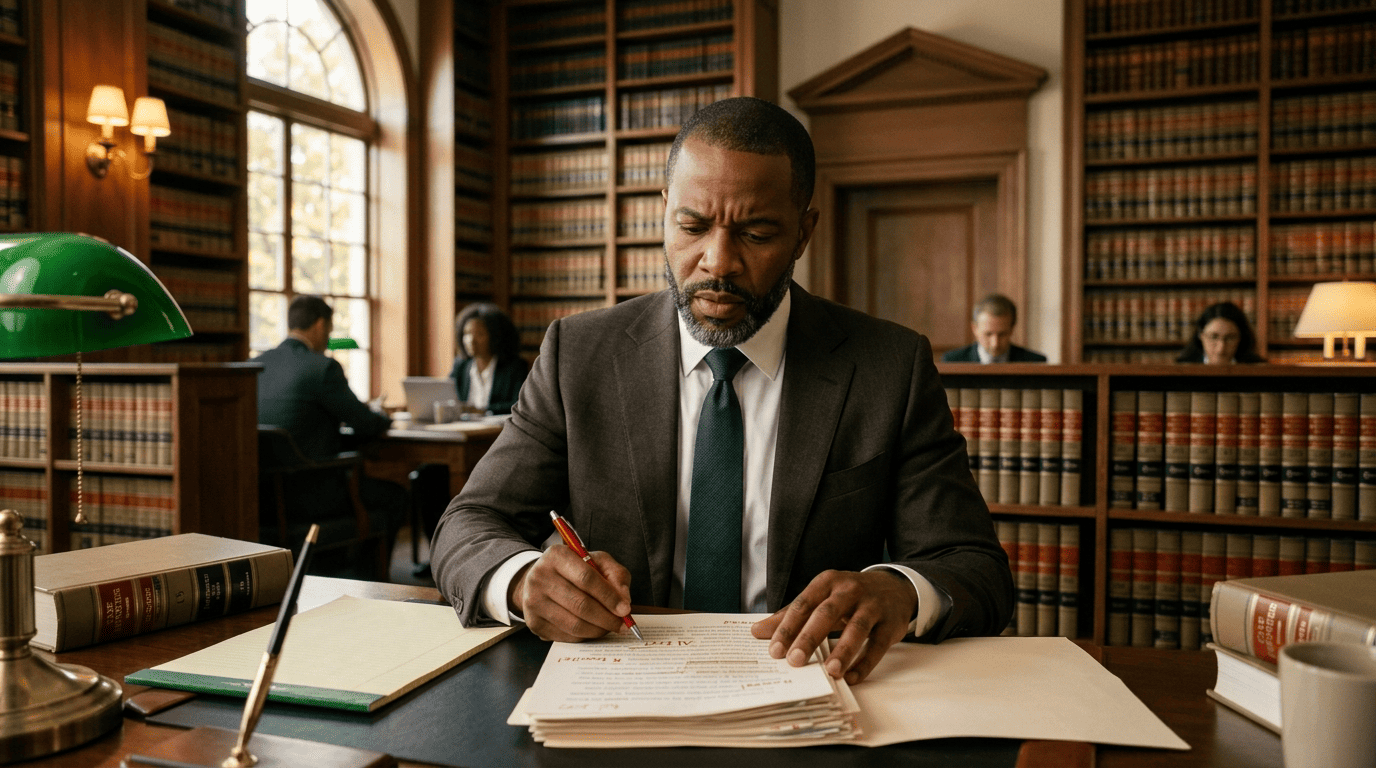
A hallucination is not a typo in a citation or a mixed-up page number — those are ordinary human errors that any attorney can make. A hallucination is a case invented from nothing, and in Mata v. Avianca that meant several fabricated elements at once:
- Fictitious airline defendants that never appeared in any real dispute.
- Invented docket numbers with no matching court record.
- Internal quotations attributed to judges who never wrote them.
- Case names that mimicked the structure of real aviation litigation closely enough to sound plausible.
ChatGPT did not misquote an existing airline dispute — it built entire cases from patterns it had learned, complete with fabricated internal citations.
Why AI Attorneys Invent Fake Cases
How large language models really work
An AI attorney tool built on a general-purpose LLM does not search a database of real case law the way Westlaw or LexisNexis does. It predicts the next most statistically likely word, one token at a time, based on patterns learned from training text. There is no built-in check that asks “does this case actually exist?” — when the model reaches a gap in its knowledge, it fills that gap with a citation that looks structurally correct because it has seen thousands of citations shaped that way. That is why the fabricated case names, reporters, and years all look plausible at a glance.
The numbers on legal accuracy
The scale of the problem has been measured directly. Researchers Matthew Dahl and colleagues published “Large Legal Fictions” in 2024, testing general-purpose LLMs on legal queries and finding hallucination rates of 58 to 88 percent depending on the model and the type of question asked. A separate test run by SCOTUSblog gave ChatGPT 50 questions about Supreme Court cases; it answered only 21 correctly. The conclusion researchers draw is consistent: general-purpose chatbots are not reliable for case law research without independent verification, no matter how confident the output sounds.

Mata v. Avianca: The Case That Started It All
What happened
Roberto Mata sued Avianca in New York state court in February 2022 after a serving cart allegedly struck his knee during an international flight; the case was later removed to the Southern District of New York. His attorney, Steven Schwartz, used ChatGPT to help draft the opposition brief. The tool produced roughly six cases that did not exist, each with a fabricated airline defendant, invented internal quotations, and fake docket numbers.
The cover-up made it worse
When Avianca’s lawyers could not locate any of the cited cases, the court ordered Schwartz’s team to produce copies of the opinions. Rather than admit the mistake at that point, the attorneys asked ChatGPT to generate what looked like the text of the fake rulings and submitted those as well. Reviewing the submission, Judge P. Kevin Castel described one of the fabricated legal analyses as “gibberish.”
Six of the submitted cases appear to be bogus judicial decisions with bogus quotes and bogus internal citations.
Judge P. Kevin Castel, Mata v. Avianca opinion
The sanction
In June 2023, Judge Castel imposed a $5,000 sanction on the attorneys under Federal Rule of Civil Procedure 11 for acting in bad faith. The order included an unusual requirement: the lawyers had to personally notify every real federal judge who had been falsely named as the author of one of the invented opinions. Mata v. Avianca became the reference case cited in nearly every subsequent discussion of AI hallucinations in litigation.
The Scale: How Common Are AI Hallucinations in Court?
A database that keeps growing
Mata v. Avianca was not an isolated incident. Legal researcher Damien Charlotin, based at HEC Paris, maintains the AI Hallucination Cases Database, which tracks confirmed court rulings involving fabricated AI-generated legal content worldwide. As of mid-2026 the database logs over 1,700 documented cases, and the pace has accelerated sharply — from roughly two or three new cases per month before 2025 to about five new cases per day now.
Not just self-represented litigants
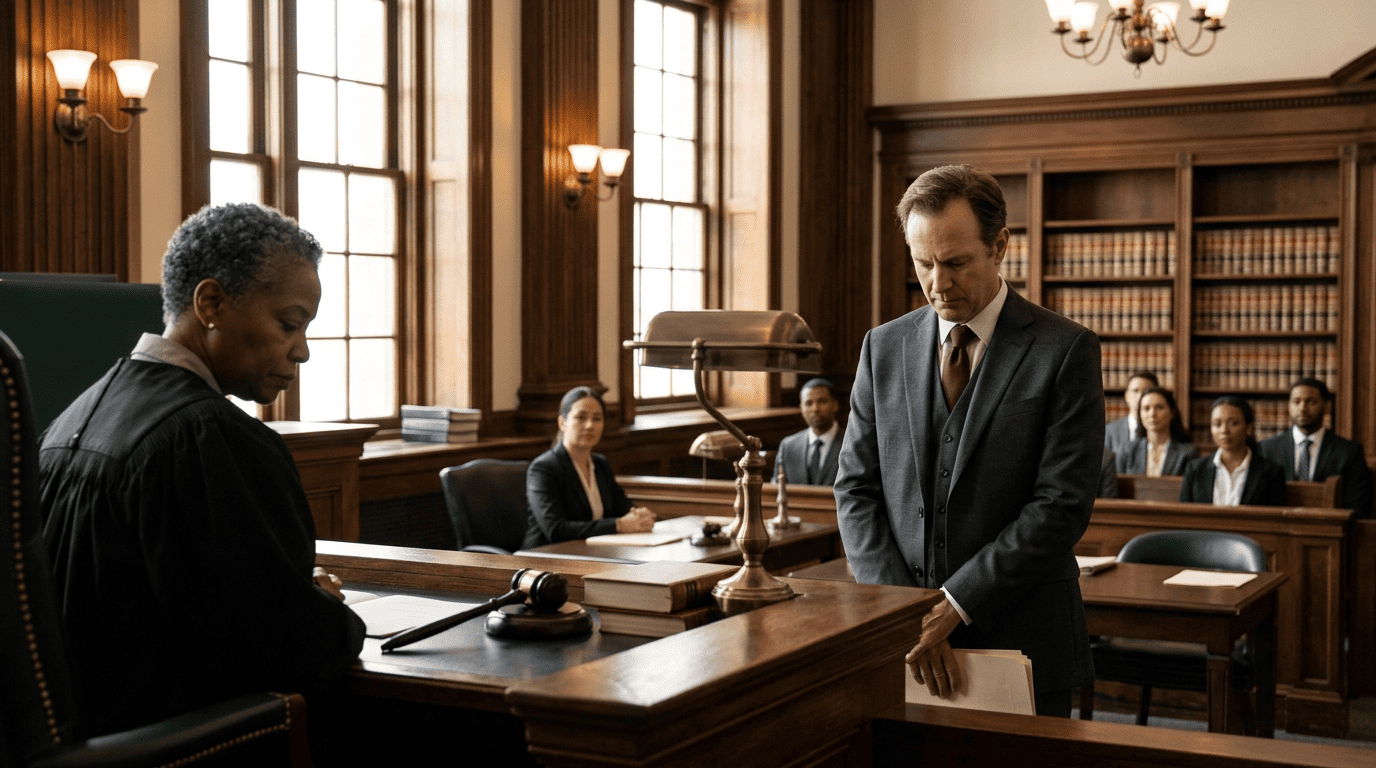
A common assumption is that this problem is limited to people representing themselves without a lawyer. The database shows otherwise: pro se litigants account for a large share, but licensed, practicing attorneys make up a substantial portion too.
| Category | Approximate count |
|---|---|
| Pro se litigants | 1,027 |
| Licensed attorneys | 682 |
| Judges | 24 |
The type of error also varies. Fully fabricated citations are the most common problem, followed by misrepresented holdings and false quotations attributed to real cases.
| Error type | Approximate count |
|---|---|
| Fabricated citations | 1,465 |
| Misrepresented holdings | 723 |
| False quotes | 476 |
Sanctions, Suspension and Disbarment: What Lawyers Risk
The escalating penalties
The consequences of filing AI-hallucinated material have grown steadily harsher since Mata v. Avianca set the initial benchmark. Below is a snapshot of how courts across jurisdictions have responded.
| Case | Penalty |
|---|---|
| Mata v. Avianca (June 2023) | $5,000 Rule 11 sanction |
| Zachariah Crabill (Nov. 2023) | Suspended 1 year and 1 day (90 days served, remainder stayed on probation) |
| Wadsworth v. Walmart (Feb. 2025) | $3,000 fine, pro hac vice status revoked |
| Coomer v. Lindell (July 2025) | $3,000 fine against each attorney |
| Whiting v. City of Athens (Mar. 2026) | $15,000 fine against each attorney, 6th Circuit |
| Nebraska — Greg Lake (Apr. 2026) | 57 of 63 citations defective; indefinite suspension |
The trajectory is clear: courts started with symbolic monetary fines and have moved toward suspending law licenses outright as repeat incidents accumulate.
The ethics rules behind them
Rule 11 requires attorneys to verify that legal citations they submit are accurate — claiming ignorance of how the AI tool works does not satisfy that duty. In July 2024, the American Bar Association issued its Formal Opinion 512, the first formal ethics guidance addressing generative AI in legal practice. It ties AI use back to several existing Model Rules of Professional Conduct:
- Rule 1.1 (competence) — an attorney must understand the capabilities and limitations of any AI tool used in a matter.
- Rule 1.4 (communication) — clients may need to be informed when generative AI is used on their case.
- Rule 11 of the Federal Rules of Civil Procedure — every citation filed with a court must be independently verified, regardless of how it was produced.
Fabricated case citations, invented statutory quotes, and phantom docket numbers all fall under this same duty of verification.
How to Use an AI Attorney Without Getting Sanctioned
Never trust AI legal output without checking it first. This is the single principle behind every set of best practices published on the topic, including the NCSC’s guidance for practitioners. Treat every citation, quote, and case summary an AI attorney tool generates as a draft claim that must be confirmed before it goes anywhere near a filing.

Keep a human in the loop for every citation. Purpose-built legal AI tools that retrieve from real case law databases reduce the hallucination rate compared with general-purpose chatbots, but independent testing from Stanford researchers has found that even retrieval-based legal tools still produce occasional fabrications. The tool can narrow the risk; it cannot eliminate the attorney’s responsibility to verify. In practice, that verification means checking the primary source directly rather than trusting the AI’s summary:
- Westlaw or LexisNexis, for the authoritative version of any cited case.
- CourtListener, for free access to federal and state opinions and dockets.
- govinfo.gov, for federal statutes, regulations, and official government publications.
None of these tools eliminate the need to read the actual holding, but they confirm the case exists in the first place.
Correct and disclose immediately if a hallucination slips through. If a fabricated citation is discovered after filing, the NCSC’s position is to fix it and notify both the court and opposing counsel right away, rather than waiting for the error to be caught by the other side.
Here is a practical checklist to run before any AI-assisted filing goes out:
- Treat every AI-generated draft as unverified until checked.
- Open every cited case directly in a primary source — Westlaw, LexisNexis, CourtListener, or govinfo.gov.
- Confirm the actual holding matches what the AI claims, not just that the case exists.
- Assign one attorney of record to personally sign off on every citation (human in the loop).
- If a hallucination is found, correct it and notify the court and opposing counsel immediately.
- Document the verification step so it can be shown if challenged later.
YMYL disclaimer
This article is general information, not legal advice. AI attorney tools, including this site, can make mistakes and must never be relied on without verification by a licensed attorney. For any real legal matter, consult a qualified lawyer admitted in your jurisdiction.